Post-Purpose & Brand As Citizen
Outdoor Connections Shakeout #1

It’s been a week since the inaugural Outdoor Connections. I want to start by saying a huge thanks to everyone who came and contributed to the day. Numerous articles and posts have been written about the event already. I’d encourage you to read what they had to say if you want a flavour of what it was all about.
Alex Roddie - Alpen Glow Journal
Gavin Fernie Jones - Reaction Collective
Tijana Tamburic - Female Narratives
Charles Ross - Outdoor Compass
I want to offer an alternative contribution. Something that will continue the thinking and explore the central themes and emergent ideas from the event. This is the first of a four-part series exploring those themes.
THEME 1: Post-Purpose & Brand As Citizen
“9 times out of 10, brand purpose is a thinly veiled attempt from marketers to feel better about themselves, selling stuff that people don’t need. I’d go as far as to say marketing’s aggressive adoption of progressive liberal values has (inadvertently) increased the platform for the far right.”
Yep. I wrote that. And yep, I felt a tad uncomfortable when Panel Host Matt Barr read it out in front of a room full of people who work in marketing.
When programming this panel (Title: Brand Purpose & Effective Storytelling) I wanted them to dig into the conventional wisdom that “purpose” is always a good thing. Writers such as Nick Ashbury have written extensively about the problems with purpose & I encourage you to go read his work. But, in a nutshell, purpose all too often obscures the profit-driven motives of brands and, frankly, makes for boring, uncreative and overly earnest storytelling that makes your skin crawl.
During the panel, Bronwen Foster-Butler (CMO, Finisterre) introduced the idea of “Purpose 2.0”, which, as I understood it, is purpose that isn’t built around a slogan or a manifesto but around what a brand actually does. I liked this idea; it neatly circumnavigates the primary complaints against purpose and sets out a show-don’t-tell mandate for purpose-driven brands. A second toss of the coin if you will. But for me, there are still issues here, not least that the brand is still the protagonist and owner of the story.
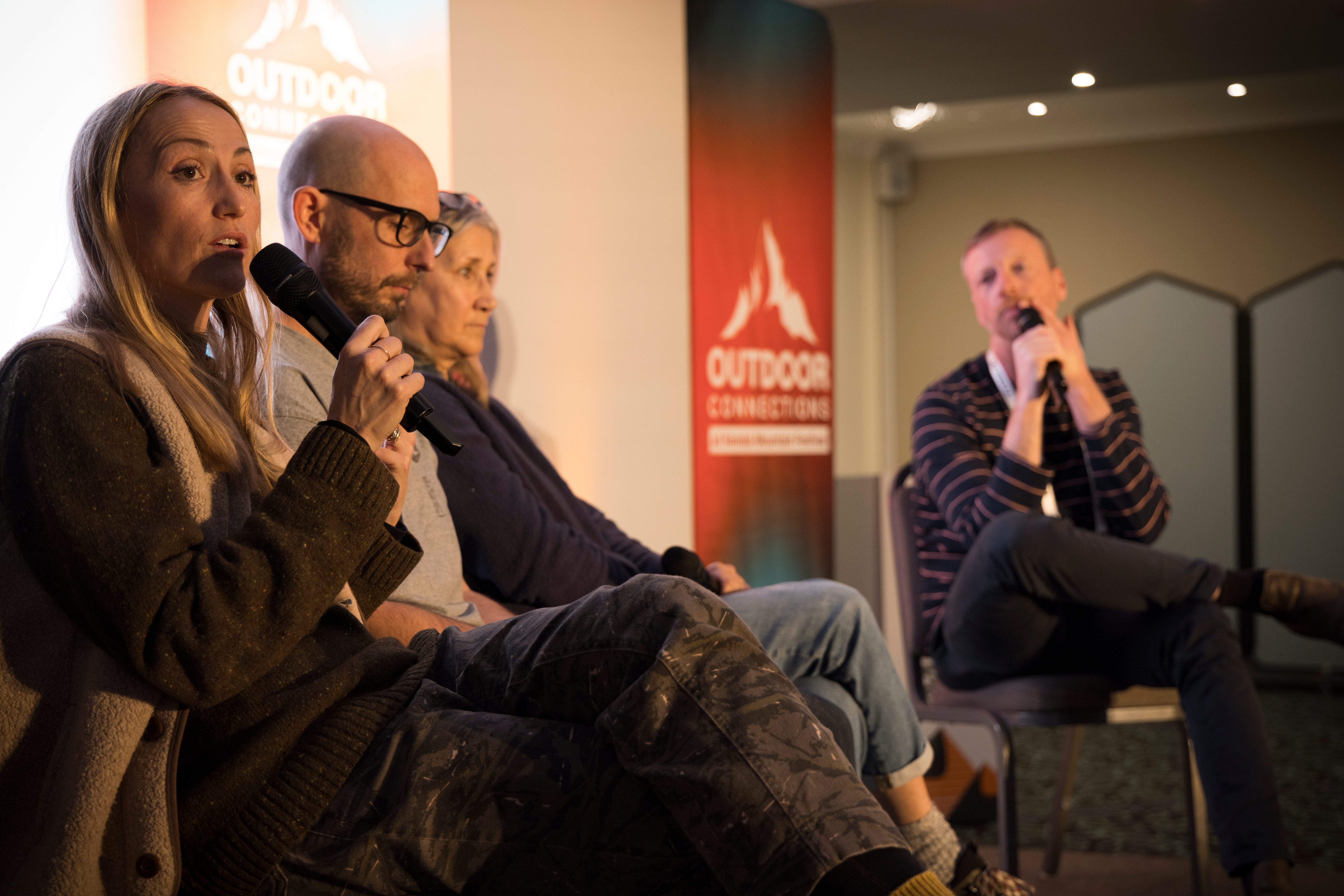
Welcome to the debate, Gavin Fernie-Jones from Re-action Collective, who took the conversation into a new paradigm. Gav’s point rested on the following idea: the brand-consumer relationship dynamic is dying, and people need to shift their thinking away from being passive consumers and instead into becoming active citizens who work together in collective agency.
Agency is something I think about a lot in the consumer narrative. Purpose-led brands assume the “consumer” has agency over their purchasing decisions. In the panel conversation, I heard someone say, 'Every pound you spend you can spend in protest’. I disagree. For me, the amount of choice an individual has is largely determined by the social, economic, and cultural capital available to them (see Distinction by Pierre Bourdieu). I.e the richer and better connected you are, the more choices you have.
And because of all that, purpose ends up doing something particularly uncomfortable: it pushes responsibility down onto individuals. It asks people to “make better choices” through purchasing decisions. This is what purpose doesn’t capture, it individualises systemic problems. It keeps the consumer in the role of being personally responsible, while the brand stands behind the camera, nagging at them to do better, even if they can’t.
I think there is an emotional truth there that people inside marketing feel but don’t always say out loud. Purpose has reached its limit. We’ve stretched the concept so thin you can see the dystopian market logic sitting underneath it.
What Comes Next: Brand As Citizen
Gavin spoke well about the transition from consumer to citizen, and the work he’s done with Re-action Collective speaks volumes to his understanding of that subject and his internalisation of the work of Jon Alexander in his book Citizens (listen to this Looking Sideways episode for more info). However, I felt the conversation at Outdoor Connections wasn’t able to translate the idea of how this might apply to brands very well. It left me asking the question: if consumers are citizens and need to reorganise collectively to develop stronger agency, where do brands fit in, and how can they contribute effectively to this ecosystem?
This, I think, is where the idea of “Brand as Citizen” comes in. The idea is simple. A citizen is someone who recognises they are part of a collective, accepts shared responsibilities, and participates in shaping the systems they rely on. Brand-as-citizen does the same. It acknowledges individual motive (profit, market share) while also recognising its share of civic responsibility and acting as a member of the community rather than the hero of its own story.
Brands already hold enormous privilege in the form of economic capital, influence, access, distribution, networks and time. If citizenship for actual people depends on having some combination of time, confidence, resources and social belonging, then brands are some of the most privileged “citizens” in the system. They have more agency, more tools and more reach than the individuals they market to. Strategy queen, Zoe Scaman, wrote eloquently about this when she said:
“Brands will collectively spend over $1.07 trillion on advertising this year. That’s more than the GDP of 175 countries. That’s cultural influence at a scale that most activists can only dream about... The problem isn’t that brands engaged with social issues. It’s that too many engaged superficially, inconsistently, and opportunistically. They wanted the badge without the work….”
And this is where “Brand as Citizen” could become the next step on the purpose journey and the missing link in Jon Alexander’s work. It doesn’t ask brands to virtue-signal or wrap their commercial ambitions in moral nonsense. It asks them to be transparent about the fact that they’re profit-making entities, then communicate and act responsibly within that reality. By acknowledging their structural position, they can exist alongside communities rather than above them.
And when you start from that position, the storytelling changes too. Purpose-led storytelling tends to buckle under its own weight because it tries to manufacture meaning when most people sense that the real story is somewhere else. I think this is what Gav means when he says ‘we don’t need better storytelling, we just need new stories’. And I get what he’s saying, but I have a slightly different take. Better storytelling is civic and democratised at its centre. It starts in the community, but it is championed and supported by brands. It flows through them. They support it with their buckets of social and cultural capital, but they do not go looking to create new stories; they allow the citizen communities they are part of to be the protagonists and creators of the stories.
If any industry should understand this instinctively, it’s outdoor. Outdoor culture was always grassroots and bottom-up. Every brand origin story is “we made the gear we needed to realise our objectives in the outdoors”, and every epic adventure story starts with a real protagonist. If we truly want brand stories that matter, the only place to find them is back in that world, by listening, and letting the community set the tone.
Great piece! Thanks for the shout out too (Caroline Keylock) - I really do believe storytelling is the unlock in this space - but it just needs to be backed up by action, as you've said here. Great to meet you at the event, and I promise to not ask you where the women in AI are next time!
Such a great piece!